Guide — WeCapture Dental
Dental video marketing, explained by the people who shoot it.
What to film, how to plan a media day inside a working practice, what to avoid, and how to turn one day of footage into a quarter of content. Written for practice owners, office managers, and DSO marketing leads.
Why video works for a dental practice
Choosing a dentist is a trust decision made by someone who is, more often than not, a little anxious. Photographs of a reception desk do not answer the questions people are actually asking: will this hurt, will they explain what they are doing, and will I feel comfortable in that room.
Video answers all three at once, which is why it outperforms every other asset on a practice website and in local ads. It also compounds — a single day of filming produces material for your homepage, your Google Business Profile, paid campaigns, and months of social posts.
The four videos every practice should own
Patient story videos
A real patient describing what they came in for and how they felt afterwards. This is the single most persuasive asset a practice can own — it answers the fear a website cannot. Keep it conversational, shoot it in your own operatory, and always get a signed media release.
Practice tours
A walk from the front door to the chair. Nervous patients want to see the room before they sit in it. A 60-second tour on your homepage and Google Business Profile removes more hesitation than another paragraph of copy.
Procedure explainers
Short answers to the questions your front desk repeats daily: what an implant day looks like, what Invisalign actually costs in time, whether a cleaning will hurt. One filmed answer replaces a hundred phone calls.
Team and culture clips
Introductions to the hygienists and associates, behind-the-scenes moments, new equipment. These build familiarity before the first appointment and give your social channels something to post between campaigns.
Media days
How to plan a shoot day inside a working practice
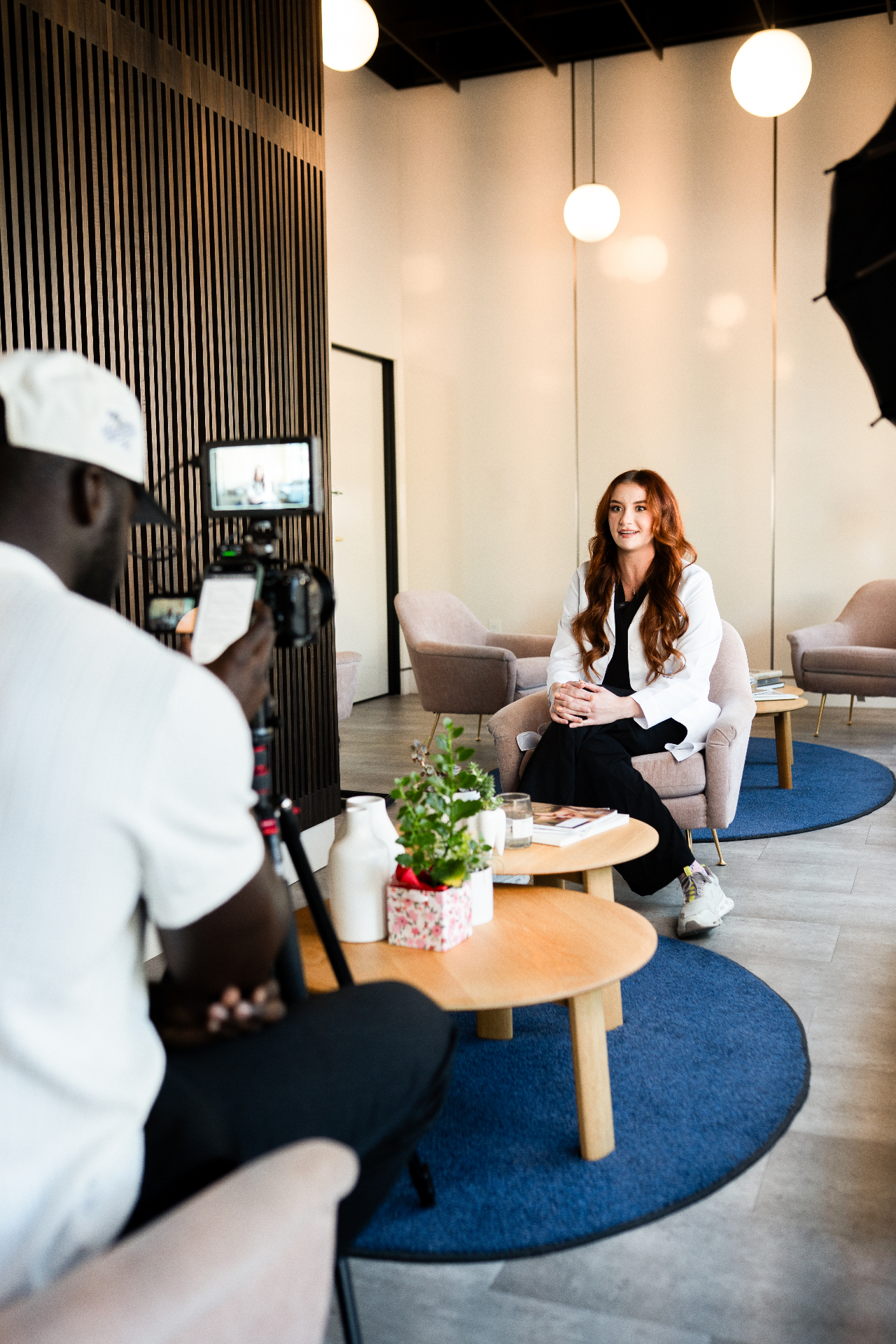
A media day is one scheduled day of filming that produces a quarter's worth of content. Here is how we run them.
- 01
Plan the shot list before the day
Decide which procedures, rooms, and team members appear on camera, and which patients have agreed to be interviewed. A shot list is the difference between a day that yields 40 usable clips and one that yields five.
- 02
Block the schedule honestly
Filming inside a working practice means either a light patient day or protected hours. Two to three uninterrupted hours will get the tour and the b-roll; a full day gets interviews as well.
- 03
Shoot for the whole quarter
Capture wide, vertical, and close-up versions of everything. One day of footage should feed your website, your ads, and three months of social posts without going back for more.
- 04
Cut for where it will actually be seen
The website version, the paid ad version, and the vertical social version are three different edits of the same footage. Ask for all three up front — recutting later costs more than planning for it.
Five mistakes we see most often
- Filming one polished brand film and nothing else — it ages out in a year and gives social nothing to post.
- Shooting horizontal only, then discovering every platform your patients use is vertical.
- Skipping written media releases and being unable to use your best interview.
- Waiting for the practice to be finished being renovated. Film the renovation too.
- No call to action. Every video should end with how to book.
Common questions
What kind of videos should a dental practice start with?
Start with three: a short practice tour so new patients know what to expect, one or two patient story videos, and a set of short clips answering the questions your front desk hears every week. Those three cover the whole decision journey — awareness, trust, and the final push to book.
How long should a dental marketing video be?
Website and social videos work best between 30 and 90 seconds. Patient stories can run two to three minutes when the story earns it. Vertical cut-downs of 15 to 30 seconds are what actually travel on Instagram and TikTok.
What is a dental media day?
A media day is one scheduled day of filming at your practice that produces a quarter's worth of content — tour footage, team introductions, procedure b-roll, patient interviews, and dozens of short social clips — instead of booking a crew every few weeks.
Do patient videos need consent?
Yes. Any patient who appears on camera signs a written media release before filming, and anything that touches treatment detail is handled with your compliance requirements in mind. We bring the release forms to the shoot.
How much does dental video production cost?
It depends on crew size, number of locations, and how much of the year the content has to cover. Most practices we work with plan around a single media day plus editing; tell us the scope on the enquiry form and we'll give you a real number rather than a guess.
Want this done for your practice?
WeCapture Dental plans and shoots media days for startup practices, established offices, and DSOs — then edits everything into the website, ad, and social cuts you actually need.